Birawa Font: Adding Playful Elegance to Your Creative Projects
Choosing the right typeface is often the bridge between a good design and a memorable one. While clean sans-serifs and professional serifs have their place, there are moments when a project demands personality, warmth, and a touch of handcrafted charm. This is where script fonts come into play, but not all are created equal. Some can feel overly formal, others too casual. Finding that sweet spot—a font that feels both modern and approachable—can transform your work. Enter Birawa, a contemporary script font designed to inject a sense of playful sophistication into a wide array of creative endeavors.
More Than Just Letters: The Character of Birawa
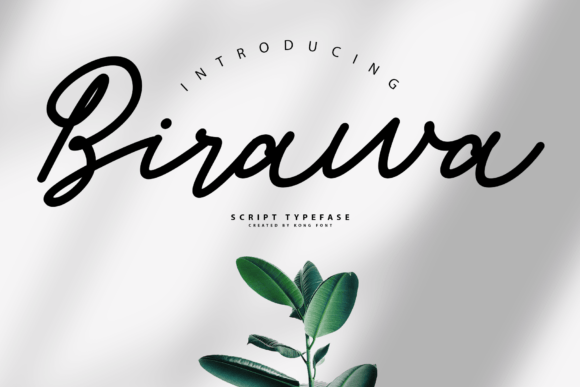
At its core, Birawa is a modern and playful script font. It’s characterized by fluid, connected letterforms that mimic a natural, handwritten flow without sacrificing legibility. Unlike rigid calligraphic scripts, its strokes have a gentle bounce and organic variation, giving text a lively, human touch. This isn't a font that shouts for attention with extreme swashes; instead, its charm lies in its balanced curves and approachable style. It’s this unique blend of modernity and playfulness that makes it a versatile tool for creators who want to convey authenticity and creativity.
The practical value of a font like Birawa lies in its ability to set a specific tone instantly. A wedding invitation using a standard serif font communicates formality, but the same invitation set in Birawa can feel romantic, personal, and joyfully celebratory. For a small business owner creating social media graphics, it can make a brand feel more friendly and relatable. For an educator designing classroom materials, it can add a layer of engagement and fun. The font does the heavy lifting of emotional communication, allowing the designer to focus on the overall composition.
Practical Applications for Crafters and Designers
The true test of any design asset is its performance in real-world applications. Birawa shines in scenarios where a personal, crafted feel is desired. For those involved in physical craft projects, its compatibility is a significant advantage. The font works seamlessly with popular design software like Photoshop and Silhouette Design Studio, making it a practical choice for creating cut files, heat transfer vinyl designs, and printed craft elements. Imagine creating custom tote bags, greeting cards, or personalized home décor signs. Birawa provides the perfect lettering for monograms, quotes, or names, offering a professional yet handmade aesthetic that stands out.
Beyond the craft studio, digital applications are equally fruitful. Bloggers and content creators can use Birawa to design eye-catching featured images, logo accents, or quote graphics that feel more engaging than standard type. Marketers might employ it sparingly in headers or call-to-action phrases to soften a campaign's tone and make it more approachable. For freelancers and entrepreneurs, it can be used to brand materials for a creative business, such as a bakery, a boutique, or a coaching service, where the goal is to project a friendly and trustworthy image. The font’s playful nature helps build a connection with the audience before a single word of copy is read.
Who Stands to Gain the Most?
While Birawa is broadly useful, certain users will find it particularly transformative. Hobbyist crafters looking to elevate their projects from homemade to handcrafted will appreciate its professional quality and software compatibility. Small business owners in creative fields can leverage it to build a cohesive and friendly brand identity across packaging, signage, and digital marketing. Educators and bloggers can use it to create materials and content that capture attention and foster a sense of community.
For graphic designers, Birawa serves as a valuable asset in their toolkit for specific client needs. It’s not a replacement for a formal script or a bold sans-serif, but a perfect solution for projects that require a human, optimistic, and creative voice. It solves the common problem of finding a script font that doesn’t feel outdated or overly ornate. By using Birawa, designers can efficiently achieve a desired mood, saving time that might otherwise be spent searching for or customizing a less suitable typeface.
Integrating Birawa Thoughtfully Into Your Workflow
Understanding a font's strengths also means recognizing its ideal context. Birawa’s playful script style is perfect for headlines, short phrases, logos, and decorative text. It is generally not suited for long paragraphs of body copy, as its connected style can reduce readability in large blocks of text. The best results come from pairing it with a clean, simple sans-serif or serif font for supporting text. For example, a website header in Birawa paired with a font like Open Sans or Lora for body text creates a beautiful hierarchy that is both engaging and easy to read.
When using Birawa in design software, take advantage of its OpenType features, if available. These might include stylistic alternates or ligatures that offer slight variations in letterforms, allowing you to customize the look further and avoid repetitive patterns for a more authentic handwritten feel. Experiment with letter spacing and sizing to see how the font behaves in different contexts. Its strength is in its adaptability—scaling it up for a bold logo mark or using it at a smaller size for a delicate accent can yield very different, yet equally effective, results.
Ultimately, the decision to incorporate a font like Birawa into your projects should be guided by the message you wish to send. It is a tool for adding warmth, approachability, and creative flair. Created by Kong Font Studio, it represents a specific aesthetic choice that, when applied thoughtfully, can significantly enhance the emotional resonance and visual appeal of your work. Whether you are crafting a physical product, building a brand, or designing digital content, Birawa offers a reliable and charming solution for projects that call for a touch of modern playfulness.