Comic Books Font: Vibrant Display for Creative Projects
More Than Just Letters: The Double-Outline Effect
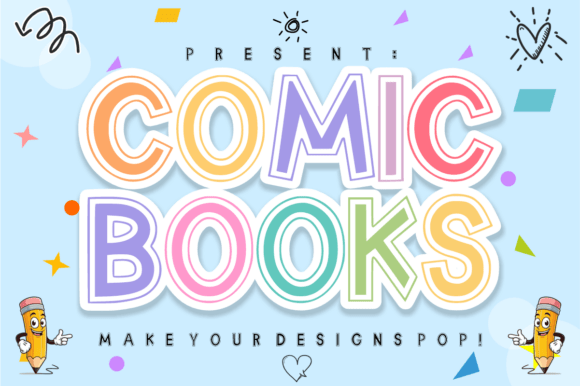
When you first see the Comic Books display font, the immediate reaction is often a sense of nostalgia mixed with modern flair. It isn't just a standard typeface; it is a design tool built around a specific aesthetic: the double-outline style. This structural choice is the defining feature of the font, creating a hollow inline detail that separates it from typical block letters or handwritten scripts. For anyone working in visual media, this distinction is crucial. It changes how you approach color, layering, and composition.
Imagine a standard bold font. It takes up space, and you fill it with color. Now, imagine Comic Books. Because of the double-outline structure, the font inherently creates a space for interaction. You have the outer edge and the inner edge, with a hollow center that begs to be filled or left transparent to reveal a pattern beneath. This makes it particularly effective for stickers, where a white outline is often needed to separate the design from the background, or for headlines where depth is required without using complex 3D rendering software.
Why Different Creators View This Font Differently
The utility of a playful, vibrant font like Comic Books shifts significantly depending on who is using it. It is not a "one size fits all" solution, but rather a specialized asset that serves different priorities for different professionals.
For Graphic Designers and Freelancers
Experienced designers often evaluate typefaces based on flexibility and legibility at scale. For a freelance designer, the "double-outline" feature of Comic Books is a time-saver. Creating this effect manually in Illustrator or Photoshop requires offsetting paths and expanding strokes—a process that takes time. Having this as a ready-to-use font allows for rapid prototyping. A designer working on a children’s book cover or a retro-themed poster can quickly lay out a headline that looks polished and intentional. The priority here is speed and workflow efficiency. They can focus on the color palette rather than the structural construction of the letters.
For Small Business Owners and Entrepreneurs
For a small business owner, particularly one in the retail, food, or entertainment sector, the priority is often brand identity and customer attraction. If you are launching a kid-centric brand—perhaps a daycare center, a toy store, or a family-friendly bakery—you need typography that communicates "fun" instantly. Comic Books offers that high-energy look without requiring a degree in design. It allows a business owner to create signage, flyers, or social media posts that feel professional yet approachable. The visual language of the font signals excitement and activity, which can be a significant factor in marketing materials aimed at parents and children.
Educators and Content Creators
Teachers and educational content creators often struggle with engagement. A worksheet or a digital presentation filled with Times New Roman or Arial can feel sterile. By incorporating a font like Comic Books into headers or key terms, educators can visually signal to students that the content is meant to be engaging or interactive. For YouTubers or streamers creating thumbnails, the bold structure of the font ensures that text remains readable even on small mobile screens. The priority here is clarity and visual hierarchy. The font doesn't just look good; it functions as a spotlight for important information.
Practical Applications: From Stickers to Branding
Understanding the technical application of Comic Books helps in deciding if it fits your current project. The font's "hollow" nature opens up specific creative avenues that solid fonts cannot offer.
- Vibrant Sticker Design: This is perhaps the most natural fit. Stickers need a border to separate them from the surface they are applied to. The double-outline style of Comic Books provides an instant "cut line" and "border line" aesthetic. You can color the inner outline differently from the outer outline to create a dynamic, pop-art look that stands out on laptops, water bottles, or planner pages.
- Layering Colors: Because the font has depth, it supports color layering exceptionally well. You might fill the main body with a gradient, the inner outline with a contrasting color, and the outer outline with a solid black to make it pop. This capability allows for high customization, meaning two designers can use the same font but achieve vastly different results based on their color theory.
- Event Branding: For events like comic conventions, birthday parties, or school carnivals, the thematic consistency is key. Comic Books fits the "adventure" theme perfectly. It can be used on tickets, banners, and lanyards to create an immersive atmosphere.
Evaluating if Comic Books Matches Your Goals
Choosing a font is a decision about voice. Does the voice of Comic Books match the message you are trying to send?
If you are working on a corporate report, a legal document, or a minimalist luxury brand, this font is likely the wrong choice. Its playful, high-energy nature clashes with the seriousness or subtlety required for those industries. However, if your goal is to capture attention, evoke nostalgia, or appeal to a younger demographic (or the young at heart), it is a strong contender.
Consider the long-term usefulness of the asset. For a hobbyist who makes birthday cards for family members, the font provides endless value in personalizing gifts. For a professional agency, it becomes part of a broader library, pulled out when the specific brief calls for a "vibrant kids display" aesthetic. It is not a replacement for your primary body text font; it is a specialized tool for display purposes.
Design Tips for Beginners
If you are new to using display fonts, working with a double-outline style like Comic Books requires a few considerations to ensure the best result.
- Mind the Spacing: Display fonts with thick strokes or outlines often require tighter letter spacing (tracking) than body text. Because the outlines add visual weight, letters can appear further apart than they actually are. Don't be afraid to manually kern or tighten the tracking to make the word feel like a cohesive unit.
- Color Contrast is Key: Since the font relies on outlines, ensure there is enough contrast between the text and the background. If you place the text on a busy background (like a photo), the hollow parts of the letters might become confusing to the eye. It is often best to place a solid shape or a slight shadow behind the text to anchor it.
- Size Matters: As a display font, Comic Books is designed to be seen at larger sizes. If you try to use it for a paragraph of small text, the outlines may merge, and the text will become illegible. Use it for titles, headers, and call-outs only.
The Value of Personality in Typography
In a digital landscape crowded with generic sans-serifs, choosing a font with personality like Comic Books is a strategic decision. It signals that a brand or project values creativity and approachability. Whether you are a parent designing a flyer for a school fundraiser, a marketer creating assets for a game launch, or a designer looking for that specific retro-comic vibe, the font offers a distinct visual language.
Ultimately, the decision to use Comic Books