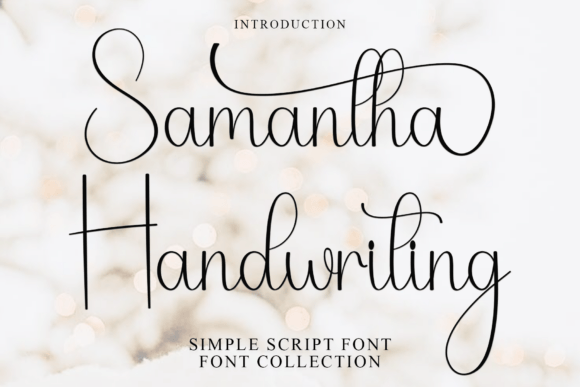
Evaluating Samantha Handwriting: A Guide for Designers and Creators
In the vast landscape of digital typography, finding a font that conveys genuine personality without sacrificing legibility is a common challenge. Samantha Handwriting presents itself as a casual and creative typeface designed to bridge the gap between professional design and personal touch. For designers, content creators, and hobbyists evaluating font options, understanding the specific characteristics, technical capabilities, and ideal use cases of Samantha Handwriting is essential for making an informed decision.
Understanding the Aesthetic and Technical Profile
At its core, Samantha Handwriting is defined by its round, playful strokes. Unlike rigid sans-serifs or formal serifs, this typeface mimics the organic flow of natural penmanship. The design philosophy focuses on warmth and friendliness, utilizing soft curves to create a relaxed and approachable atmosphere. This aesthetic is intended to reduce the visual barrier between the content and the viewer, making the text feel more like a personal note than a corporate statement.
From a technical standpoint, the font is built for versatility across various creative software environments. It is equipped with standard PUA (Private Use Area) Encoded glyphs. This encoding is a critical feature for users who may not be experts in advanced typography. It ensures that all decorative characters and alternates are accessible even in basic text editors or design platforms that do not support advanced OpenType features. Consequently, the font functions reliably in major application engines, including Adobe Photoshop, Corel, Adobe Illustrator, and web-based tools like Canva.
Identifying the Ideal Use Cases
Evaluating a font requires matching its strengths to specific project requirements. Samantha Handwriting is not a universal solution for all text needs; rather, it excels in specific contexts where its unique traits can shine.
Personal and Event Invitations
For projects such as wedding stationery, birthday cards, or baby shower invitations, the goal is often to evoke emotion and intimacy. The charming, hand-drawn aesthetic of Samantha Handwriting adds a fun and unique touch that pre-installed system fonts often lack. It replaces the cold precision of digital text with a handmade feel, which is highly valued in event planning and stationery design.
Social Media and Digital Marketing
In the fast-scrolling environment of social media, visual distinctiveness is paramount. The playful nature of this font can help graphics stand out on platforms like Instagram or Pinterest. It works particularly well for quotes, callouts, or short headers where the goal is to capture attention quickly and convey a lighthearted brand voice.
Branding for Small Businesses
Small businesses, particularly those in the lifestyle, food, or boutique sectors, often seek to project an image of approachability. Using Samantha Handwriting for a logo or brand collateral can signal to customers that the brand is friendly and personal. However, this application requires careful consideration of the target audience's expectations.
Benefits, Tradeoffs, and Considerations
While the aesthetic appeal is evident, a balanced evaluation must consider the tradeoffs inherent in casual script fonts.
The Benefits: Accessibility and Vibe
The primary benefit is the immediate establishment of a specific tone. It saves designers time in trying to "warm up" a corporate font. Furthermore, the PUA encoding is a significant technical benefit. It democratizes access to stylistic alternates, allowing users of simpler tools like Canva to access glyphs that might otherwise be hidden behind complex software menus.
The Tradeoffs: Legibility and Formality
The most significant consideration is legibility, particularly at smaller sizes. Round, hand-drawn strokes can blur together when used for body text or in low-resolution environments. Therefore, it is generally unsuitable for long-form reading, technical manuals, or legal documents.
Additionally, the "friendly" aesthetic can be perceived as unprofessional in certain industries. For corporate law firms, financial institutions, or academic research papers, the casual nature of Samantha Handwriting may undermine the authority of the content.
Decision-Making Insights: Is It the Right Fit?
To determine if Samantha Handwriting aligns with your goals, consider the following decision-making framework:
- Context of Use: Will the font be used for headers, logos, or short decorative text? If yes, it is a strong candidate. If you need a font for paragraphs or technical data, you should look elsewhere.
- Audience Expectations: Does your audience expect formality and structure, or do they respond better to personal connection and creativity? If your brand voice is strictly professional, this font may create a disconnect.
- Technical Environment: Are you working across multiple platforms? The broad compatibility with Adobe and Canva makes it a practical choice for teams that use mixed software ecosystems.
Comparing Alternatives
If Samantha Handwriting feels too playful for your needs, you might consider other styles within the handwriting family. A slanted calligraphy font might offer elegance suitable for luxury branding, while a monoline script might offer better legibility for packaging design. Conversely, if you find the font too casual, a humanist sans-serif might provide the warmth you seek without sacrificing the professional structure of a standard typeface.
Ultimately, Samantha Handwriting is a specialized tool designed to inject personality and warmth into digital designs. By weighing its playful aesthetic against the specific needs of your project and audience, you can determine if its unique charm is the missing element in your creative toolkit.