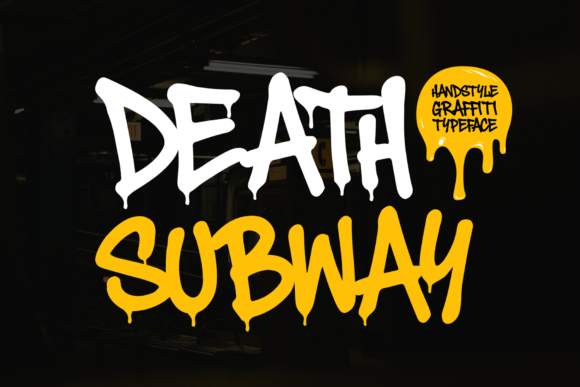
Exploring the Raw Energy of Death Subway: A Graffiti Font for the Urban Age
What Exactly is Death Subway?
At its core, Death Subway is a digital typeface, but to call it merely a "font" would be to undersell its character. It is a carefully crafted visual representation of handstyle graffiti, a specific genre of street art focused on the artist's unique tag or signature. Designed to capture the raw, energetic spirit of underground rebellion, this typeface is built for creators who want to infuse their work with an authentic, spray-paint aesthetic. It is not a sterile, geometric font born from a computer grid; it is a digital homage to the imperfect, fast, and fearless lines drawn on concrete walls and metal surfaces.
The inspiration behind Death Subway is drawn directly from the gritty, visceral world of urban exploration and street culture. Think of the art seen under bridges, in the echoing tunnels of a subway system, or across the concrete expanses of a city's less-traveled corners. Each letter in the Death Subway alphabet feels hand-crafted, featuring the slight wobbles, inconsistent edges, and natural flow that come from a marker moving quickly or a spray can being swept across a surface. It is a typeface that doesn't just spell words; it shouts them with expression, confidence, and an undeniable raw energy.
The Two Faces of Urban Expression: Clean and Drip Styles
Understanding the versatility of Death Subway requires looking at its two distinct styles, each serving a different creative purpose while staying true to its rebellious roots.
The Clean Style: Structured Street Soul
The Clean version of Death Subway delivers tight, legible strokes. While it retains the hand-drawn, imperfect character of its graffiti inspiration, the lines are more controlled. This makes it exceptionally useful for projects where readability is crucial but you still want to maintain a street-level authenticity. It is the go-to choice for branding and typography that needs to communicate clearly without losing its soul.
Practical applications for the Clean style include:
- Brand Logos and Wordmarks: For streetwear brands, skate companies, or urban-focused businesses, the Clean style offers a logo that is both professional and edgy.
- Poster Headlines: Event posters for concerts, gallery openings, or urban sports tournaments can use this style to grab attention while remaining easy to read from a distance.
- Digital User Interfaces: In specific contexts, like the menu of a street food app or the title screen of an indie video game, it adds character without compromising usability.
The Drip Style: Motion and Attitude
The Drip style is where the font truly embraces the moment of creation. It adds the essence of freshly painted walls and the spontaneous energy of tagging. The defining feature is the "ink drip"—those organic, gravity-pulled streaks that occur when paint or ink is applied heavily. This effect brings a powerful sense of motion and attitude to every word.
The Drip style excels in contexts that celebrate impact and artistry:
- Album Covers and Music Artwork: For genres like hip-hop, punk, or electronic music, the Drip style visually communicates the sound's intensity and raw emotion.
- Apparel Graphics: T-shirts, hoodies, and hats featuring the Drip style make a bold statement, perfect for limited-edition streetwear drops.
- Event Flyers and Stickers: When you need to create a sense of urgency, rebellion, or underground cool, the dripping letters provide that visceral punch.
Together, these two styles create a comprehensive visual identity toolkit. The Clean version provides the foundation and versatility, while the Drip version offers the high-impact, stylistic accent. This duality allows designers and artists to maintain a consistent aesthetic across different applications, from a business card to a massive mural.
The Cultural Roots: Why "Death Subway"?
The name itself is a direct reference to its cultural genesis. "Subway" in the context of graffiti is iconic. The New York City subway system of the 1970s and 80s was a moving canvas, a global epicenter for the development of graffiti as an art form. Trains became rolling galleries, carrying an artist's name and style across the city. The "Death" in the name is not morbid but rather evocative of the bold, in-your-face attitude of the culture—a "visual shout" that commands attention. It reflects the high-stakes, adrenaline-fueled reality of painting in the tunnels and rail yards, where the art was as much about claiming space and identity as it was about aesthetics.
This connection to real-world practice is what separates authentic graffiti-inspired fonts from generic "grunge" or "distressed" typefaces. The imperfections in Death Subway are not random; they are inspired by the physics of real marker lines and the behavior of spray paint on porous surfaces like concrete. This authenticity is crucial for designers aiming to create work that resonates with audiences who value cultural credibility.
Practical Relevance in Modern Design and Business
In today's visually saturated world, brands and creators constantly seek ways to stand out and connect with audiences on a more human, emotional level. This is where a typeface like Death Subway finds its modern relevance. It serves as a bridge between the raw authenticity of street art and the polished demands of commercial design.
For Businesses and Brands:
Using a graffiti-inspired font can be a strategic move to position a brand as youthful, edgy, and culturally aware. A craft brewery might use it for a limited-release can design, a tech startup focusing on creative tools might use it in their marketing to appeal to designers, or a local music venue could use it to establish its identity as a hub for underground talent. The key is context—it works best for brands whose identity aligns with concepts of creativity, rebellion, and urban culture.
For Artists and Designers:
Death Subway is a tool that saves time while enhancing creativity. Instead of manually drawing custom lettering for every project, a designer can use this font as a starting point, customizing it further or using it as-is for a consistent, high-quality result. It allows for the rapid prototyping of ideas with an authentic street art vibe, which is invaluable in fast-paced creative industries.
In Education and Cultural Context:
Understanding fonts like Death Subway also offers a lesson in cultural history and visual communication. It demonstrates how subcultural art forms (like graffiti) move from the margins to influence mainstream design, advertising, and fashion. It highlights the importance of context in typography—how the style of a letterform can convey a world of meaning about a product, event, or idea before a single word of body text is read.
Dispelling Common Misconceptions
A common misunderstanding is that graffiti-style fonts are only for "illegal" or "anti-establishment" projects. While their roots are in unsanctioned art, their application in design is now widespread and legitimate. The value lies in the aesthetic and emotional resonance, not the original context of the act. Another assumption is that such fonts are not versatile. As demonstrated by the Clean and Drip styles of Death Subway, a well-designed graffiti font can be adapted for both high-impact display use and more structured, legible applications.
Conclusion: More Than Just Letters
Death Subway is ultimately a tool for visual storytelling. It encapsulates a specific moment in cultural history—the energy of the subway, the boldness of the tag, the creative defiance of street art. For the modern creator, it offers a way to inject that same energy into digital and print media. Whether you're designing a poster for a underground hip-hop show, branding a new streetwear label, or creating album art for an indie band, this typeface provides the raw, authentic voice that can make a project feel immediate, confident, and unforgettable. It is a reminder that sometimes, the most powerful communication comes not from perfection, but from raw, unfiltered expression.