Give Your Projects a Gritty Edge with Death to Smudgey
Sometimes, the clean, polished look just doesn't cut it. You're working on a project that needs a bit of attitude, a touch of the raw, or a vibe that feels hand-crafted and slightly rebellious. Standard fonts can feel too sterile for these moments. This is where a typeface like Death to Smudgey enters the conversation. It’s not just another font; it’s a design tool with a distinct personality, offering that coveted distressed, hand-drawn aesthetic instantly.
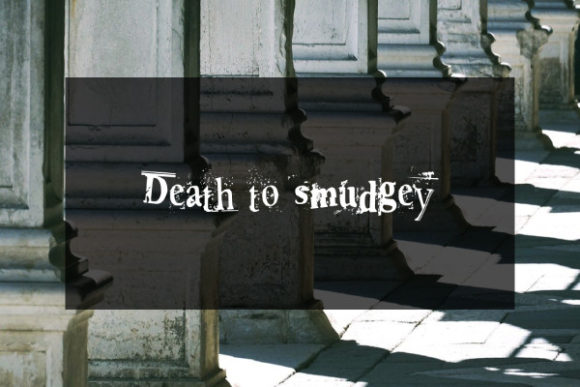
Created by designer Vic Fieger, this decorative font is defined by its inclined characters and smudgy appearance. The letters look as if they’ve been hastily written with a thick marker or perhaps screen-printed with slightly imperfect ink. The edges are soft and slightly blurred, giving everything a tactile, gritty quality. This isn't about precision; it's about impact and emotion. It immediately sets a tone, telling your audience that what they're looking at is edgy, authentic, or perhaps a little nostalgic.
When Does a Smudgy Font Make Sense?
The true value of a font like Death to Smudgey is revealed in its application. It shines in specific scenarios where character trumps clarity. Think about projects that aim to evoke a sense of rebellion, vintage charm, or artistic flair. It’s a fantastic choice for creating eye-catching headlines and titles that need to grab attention in a crowded space. A blog post about underground music, a podcast about forgotten horror films, or a brand that prides itself on its non-conformist attitude could use this font to establish its identity before a single word of the body copy is read.
For event promotions, especially for things like music festivals, indie film screenings, or art shows, Death to Smudgey can set the mood perfectly. Imagine a poster for a garage rock band’s tour. The band name in a clean sans-serif might feel generic. Set it in this smudgy, slanted typeface, and you instantly communicate the raw energy and DIY ethos of the music. The font does a significant part of the storytelling work.
A Font for Different Creative Worlds
The applications extend far beyond music and posters. Consider the world of apparel and merchandise. T-shirt designers are constantly searching for graphics that feel unique and expressive. Using Death to Smudgey for a slogan or a brand name on a shirt can give it a streetwear or skate-brand vibe. It looks like it was printed in a small workshop, not mass-produced in a factory, which is a powerful aesthetic in today's market.
Even in the digital realm, it has its place. Website designers can use it sparingly for impactful elements like a hero section headline or a call-to-action button on a site for a tattoo parlor, a craft brewery, or an independent game developer. It signals to the visitor that the brand is bold and creative. Similarly, social media managers can leverage it for creating standout graphics for Instagram stories or YouTube thumbnails, where a fleeting first impression is everything.
Practical Considerations Before You Commit
While its personality is its greatest strength, it's also the main reason to use it thoughtfully. The very "smudgy" quality that makes it so appealing means it is not suitable for long blocks of body text. Imagine trying to read a 500-word article in this font; it would be visually exhausting and nearly illegible. Its role is that of a highlighter, not the main narrator. It’s best used for short, high-impact words and phrases.
Another key consideration is legibility at small sizes. The blurred edges that give it character can become a liability when the font is scaled down, turning letters into an indistinguishable blur. Always test it at the size you intend to use it. If you’re designing a logo that will also appear as a tiny favicon on a browser tab, you might find the details get lost. In such cases, pairing it with a very clean, simple font for supporting text or alternative applications is a wise strategy.
Thinking About the Audience and Context
Who are you trying to reach? Death to Smudgey resonates strongly with audiences who appreciate counter-culture aesthetics, vintage styles, and artistic authenticity. It might be perfect for a brand targeting millennials and Gen Z with an interest in indie music, street art, or alternative fashion. However, it would likely be a poor choice for a corporate law firm’s annual report or a medical brochure, where clarity, trust, and professionalism are communicated through clean, stable typography.
The context of your project is everything. Using it for a children's birthday party invitation might feel out of place, but it could be perfect for a flyer for a Halloween event. It’s about matching the font's inherent personality with the message and the emotional response you want to evoke. Ask yourself: does this "smudgy" feel support or distract from my core message?
Making It Work: Pairing and Application
The most effective way to use a highly stylized font like this is in contrast. Pair it with a neutral, highly legible sans-serif font for body copy. Think of using Death to Smudgey for the main title, and then a font like Open Sans, Lato, or even a simple serif for the descriptive text underneath. This creates a visual hierarchy that is both dynamic and functional. The decorative font draws the eye, and the body font delivers the information clearly.
Don't be afraid to experiment with color and texture. This font often looks incredible when set against a textured background, like aged paper, concrete, or a grungy digital pattern. The smudged edges can blend slightly with the background, enhancing the hand-crafted effect. In terms of color, high-contrast combinations work well—think stark white on a dark, moody background, or a vibrant color that pops against a muted one.
Ultimately, Death to Smudgey is a specialized tool in a designer's toolkit. It’s not a workhorse font for everyday use, but when the project calls for a dose of gritty character, raw energy, or vintage charm, it can be the perfect solution. By understanding its strengths and using it with intention, you can leverage its unique personality to make your work stand out and connect with an audience that values authenticity and bold expression.