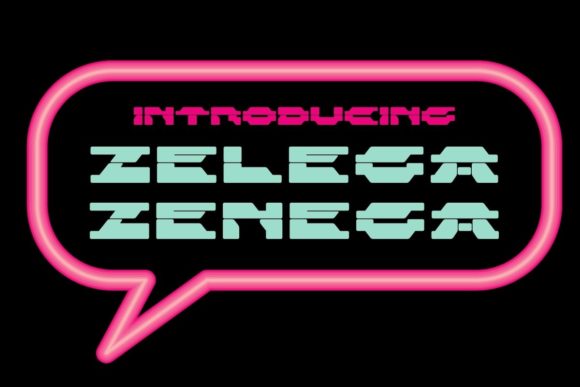
Strategic Deployment of Zelega Zenega: Beyond Aesthetic Choice
In the crowded digital landscape, visual hierarchy is not merely a design preference; it is a critical component of user experience and strategic communication. For professionals ranging from entrepreneurs to educators, the selection of a typeface is a decision that impacts readability, brand perception, and engagement metrics. Zelega Zenega, a futuristic decorative font characterized by its wide and stark aesthetic, presents a unique set of opportunities and challenges for modern projects. Understanding how to integrate this typeface effectively requires a shift from viewing fonts as decoration to viewing them as functional assets in achieving specific outcomes.
Visual Positioning and Brand Architecture
When establishing a brand identity, the goal is often to create an immediate impression that aligns with the company’s value proposition. Zelega Zenega is inherently suited for projects that require a distinct, forward-looking identity. Its wide letterforms and stark geometry suggest stability, modernity, and technical precision. This makes it a strategic choice for businesses operating in sectors such as SaaS, architecture, automotive technology, or advanced manufacturing. However, deploying it without considering the broader brand architecture can lead to dissonance. If a brand’s voice is conversational and traditional, the aggressive futurism of Zelega Zenega may confuse the audience rather than clarify the message.
The decision to use Zelega Zenega should be part of a larger positioning strategy. It works best when the organization wants to project an image of innovation and robustness. For a startup pitching to investors, a presentation deck utilizing this font can subconsciously signal that the company is building something substantial and future-proof. Conversely, for a heritage brand looking to modernize, Zelega Zenega might serve as an accent font—used in headlines to signal a shift toward digital transformation—while retaining a more classic body font to maintain continuity with the past.
Functional Applications in User Interface Design
The utility of Zelega Zenega extends beyond static logos. In the realm of user interface (UI) and user experience (UX) design, typography must balance personality with functionality. Because Zelega Zenega is a display typeface, it is optimized for impact at larger sizes. Using it for body copy is generally discouraged, as the wide spacing and decorative elements can hinder reading speed and comprehension in long-form text. Instead, the strategic application involves using it for key navigational elements, section headers, or call-to-action buttons where immediate recognition is required.
Consider a dashboard for a logistics company or a data analytics platform. The headers of various data modules need to be instantly distinguishable. Zelega Zenega provides that distinction through its stark visual weight. It draws the eye to the most critical information without requiring additional graphical elements like heavy borders or bright colors. This approach supports a cleaner interface, reducing visual clutter and helping users focus on the data that drives their decisions. The font acts as a silent guide, structuring the information hierarchy efficiently.
Strategic Planning for Typography Implementation
Integrating a specialized font like Zelega Zenega into a design system requires rigorous planning. It is not enough to simply install the font files; teams must define clear rules for its usage to maintain consistency across all touchpoints. This involves creating a typographic scale that dictates exactly where and how the font appears. For instance, a style guide might mandate that Zelega Zenega is used exclusively for H1 and H2 headings in marketing materials, while a neutral sans-serif handles all other text.
This planning phase also involves technical considerations. Performance is a key concern in web design. While Zelega Zenega adds significant visual value, designers must ensure that the font files are optimized for the web to prevent slow load times, which can negatively impact SEO rankings and user retention. Strategic use involves lazy loading the font or using variable font formats if available. The goal is to enhance the aesthetic experience without compromising the technical performance of the site or application.
Contextual Relevance and Audience Perception
Every design choice communicates a message to a specific audience. The stark, wide look of Zelega Zenega resonates strongly with a younger, tech-savvy demographic that is accustomed to the aesthetics of sci-fi interfaces and modern gaming. For marketers targeting this segment, the font can enhance engagement by creating a visual environment that feels familiar and exciting. It validates the content’s relevance to their interests.
However, context is everything. In a corporate legal document or a financial report, the use of a futuristic decorative font might undermine the credibility of the content. It could appear unprofessional or flippant. Therefore, the decision-maker must assess the "gravity" of the communication. Zelega Zenega is best reserved for creative campaigns, product launches, and digital-first environments where breaking the mold is part of the strategy. In educational contexts, it might be used for course headers in a coding bootcamp or a design school, but avoided in the text of a history lesson.
Mitigating Risks in Typographic Choices
One of the primary risks of using a distinctive font like Zelega Zenega is "aesthetic fatigue." If a brand relies too heavily on a single decorative element, the visual identity can become dated quickly as design trends evolve. To mitigate this, creators should pair Zelega Zenega with a highly versatile, neutral typeface. This creates a balanced system where the display font provides the "spice" and the body font provides the "nutrition." This balance ensures that the design remains functional even if the accent font is swapped out later.
Another risk involves accessibility. Decorative fonts can sometimes pose challenges for users with dyslexia or visual impairments due to irregular character shapes. While Zelega Zenega is designed with clarity in mind, practitioners must test their designs against accessibility standards (such as WCAG). Strategic deployment means ensuring that the font size is sufficient and that the contrast ratios meet minimum requirements. The aesthetic appeal should never come at the expense of inclusivity.
Creative Applications and Long-Term Value
For freelancers and creators, Zelega Zenega offers a way to differentiate their portfolio. A personal website or a case study presentation that utilizes a bold, futuristic font stands out from the sea of generic templates. It signals to potential clients that the creator pays attention to detail and is capable of making bold design choices when appropriate. This can be a subtle but powerful differentiator in a competitive market.
In the realm of content marketing, headers are the "hooks" that capture attention in a scroll-heavy environment. Using Zelega Zenega for article titles or social media graphics can significantly increase click-through rates. The font’s stark appearance cuts through the noise of a busy feed. However, to derive long-term value, this usage must be consistent. Sporadic use of a unique font can make a brand look disjointed. Consistency builds recognition; over time, the audience begins to associate the specific visual style of Zelega Zenega with the brand’s content, creating a Pavlovian response to new material.
Decision-Making Framework for Font Selection
When deciding whether to adopt Zelega Zenega, decision-makers should follow a structured framework. First, define the primary goal of the communication. Is it to inform, persuade, or entertain? If the goal is to entertain or showcase innovation, Zelega Zenega is a strong candidate. Second, analyze the competitive landscape. What typography are competitors using? If the market is saturated with serif fonts, a move toward a wide, futuristic display font can provide a necessary point of differentiation.
Third, consider the longevity of the project. For a short-term campaign or a specific event landing page, Zelega Zenega is excellent for creating immediate impact. For a long-term brand identity, it requires more rigorous testing and pairing. Finally, test the font with a small segment of the target audience before a full rollout. Gather feedback on readability and perception. This data-driven approach removes the guesswork from design decisions, ensuring that the choice of Zelega Zenega is grounded in practical results rather than subjective taste.
Conclusion
Typography is a tool, and like any tool, its value lies in the skill of the user. Zelega Zenega is a powerful asset for those who understand its specific strengths. It offers a way to inject energy, modernity, and structure into digital and print projects. By approaching its usage with strategic intent—balancing aesthetics with accessibility, and impact with readability—professionals can leverage Zelega Zenega to enhance their communication, strengthen their brand identity, and ultimately achieve their project goals with greater precision.