Deallisa: A Strategic Tool for Handwritten Impact
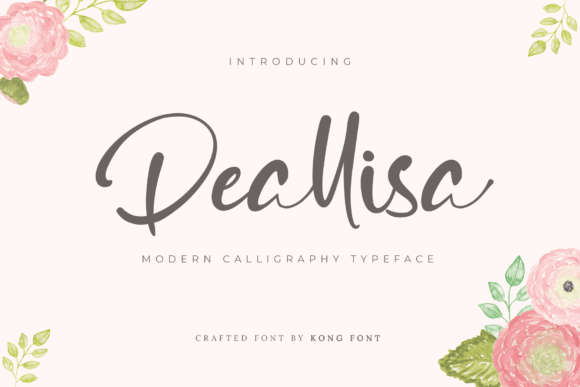
In a digital landscape saturated with sterile, geometric sans-serifs and predictable serif fonts, the human touch has become a rare commodity. Deallisa, a modern and playful handwritten script font developed by Kong Font Studio, offers a distinct solution for this gap. While it is easy to view typefaces merely as aesthetic choices, experienced designers and business owners understand that typography is a strategic asset. The decision to use a font like Deallisa should not be based on a fleeting trend or a simple preference for "pretty letters." Instead, it requires a calculated assessment of how this specific visual voice aligns with your communication goals, brand positioning, and the psychological impact you wish to have on your audience.
When we look at the technical and aesthetic composition of Deallisa, we see a font that bridges the gap between casual illegibility and rigid formality. It is a handwritten script, but it is "modern," suggesting that it avoids the looping, overly flourished connections of traditional calligraphy that can sometimes hinder readability on small screens. For the entrepreneur, marketer, or educator, this distinction is vital. You are not just choosing a style; you are selecting a tool that facilitates specific outcomes. Whether you are designing packaging for a small business, creating social media assets, or drafting materials for a client presentation, the strategic deployment of Deallisa can significantly alter the perception of your message.
The Psychology of Playfulness in Professional Contexts
One of the defining characteristics of Deallisa is its "playfulness." In strategic planning, tone is everything. If your brand voice is authoritative, stern, and corporate, a playful script might create a dissonance that confuses your audience. However, if your strategy relies on approachability, warmth, and creativity, Deallisa becomes a powerful ally. Consider the freelancer pitching a project to a startup. Using a standard Arial or Times New Roman might signal competence, but it does not signal innovation. Conversely, using Deallisa in a mood board or a header can subtly communicate that you are a creative thinker who values personality and engagement.
For educators and course creators, the use of a handwritten font like Deallisa can lower the psychological barrier to learning. Academic text can often feel intimidating. By utilizing a friendly, handwritten aesthetic for headings or call-outs, you create a welcoming environment. This is a practical application of design psychology. The viewer perceives the content as more accessible and less rigid, which can lead to higher engagement rates with the material. It is not about making the work seem "easy," but rather making the learning experience feel more human and less mechanical.
Operational Compatibility: Integrating Deallisa into Your Workflow
Strategy is useless without execution, and execution relies on tools. A significant advantage of Deallisa is its compatibility with industry-standard software. For creators who rely on precision and layering, the fact that this font is fully functional in Adobe Photoshop is essential. It allows for high-resolution rendering and seamless integration into complex digital designs. However, the utility of Deallisa extends beyond the screen.
For physical product creators and hobbyists, compatibility with Silhouette Design Studio is a game-changer. If you are a small business owner creating custom decals, wedding invitations, or apparel, you need a font that cuts cleanly. Handwritten fonts can often be problematic for cutting machines due to thin, overlapping swashes. Because Deallisa is designed with modern utility in mind, it generally offers better legibility and cleaner lines for physical production. Before committing to Deallisa for a large print run or a batch of merchandise, it is wise to run a test cut. This operational step ensures that the "playfulness" of the font does not result in production errors or wasted materials.
Strategic Positioning and Brand Identity
Choosing a typeface is a positioning decision. When you select Deallisa, you are positioning your brand or project in a specific quadrant of the market. This font is particularly effective for industries such as beauty, lifestyle, food and beverage, boutique retail, and children’s products. In these sectors, the "human" element is a key differentiator. Consumers in these markets often seek connection and authenticity. A handwritten script suggests that there is a person behind the product, not just an algorithm or a factory line.
However, this positioning must be deliberate. If you are a financial advisor or a legal firm, using Deallisa for your main body copy would be a strategic error that undermines trust. Clients in those sectors seek stability and seriousness. In such cases, Deallisa might be restricted to internal "team building" materials or informal holiday cards, but never for external-facing critical communication. The decision-maker must analyze the context: Who is reading this? What is their expectation of professionalism? Does this font support or sabotage the trust I am trying to build?
Avoiding the Trap of Random Application
The most common mistake in design is randomness. Just because a font looks good on a Pinterest board does not mean it belongs in your quarterly report. To use Deallisa intentionally, you must establish a hierarchy. A font of this nature is best used as an accent, not a foundation. It works exceptionally well for H1 or H2 headers, pull quotes, or specific call-to-action buttons where you want to draw the eye and evoke an emotion.
Using Deallisa for long-form body text is generally inadvisable. The cognitive load required to read handwritten scripts for extended periods is higher than reading standard serif or sans-serif fonts. This can lead to fatigue and a drop-off in readership. A thoughtful approach involves pairing Deallisa with a clean, neutral font. For example, using a modern sans-serif for the information-heavy paragraphs and Deallisa for the emotional highlights creates a balanced visual rhythm. This combination respects the reader's need for clarity while satisfying the brand's need for personality.
Long-Term Value and Creative Longevity
Trends in typography come and go. The "hipster" handwritten look of 2015 has evolved into the "modern minimalist" script of today. Deallisa fits the current zeitgeist well, but how does it hold up over time? The value of a font lies in its versatility. Because Deallisa is described as "modern," it possesses a cleaner baseline and more consistent letterforms than heavily distressed or vintage scripts. This gives it a longer shelf-life.
For the content creator or publisher, building a library of reliable assets is crucial. Investing time in understanding how Deallisa renders across different devices—mobile vs. desktop, print vs. digital—ensures that your content remains professional as it scales. If you are a blogger, consistency in your typography builds brand recognition. Returning readers will begin to associate the visual style of Deallisa with your voice, creating a subconscious link between your visual identity and your content quality.
Decision-Making Checklist for Using Deallisa
Before finalizing a design that features Deallisa, consider these strategic checkpoints to ensure you are making a sound decision:
- Audience Alignment: Does your target demographic respond better to corporate authority or personal connection? If the latter, Deallisa is a strong candidate.
- Medium of Delivery: Will this be viewed on a high-resolution screen, a mobile device, or cut from vinyl? Test the legibility of Deallisa specifically in the final medium.
- Hierarchy Role: Are you using this for headers to grab attention, or for body text? Avoid using Deallisa for dense paragraphs.
- Pairing Strategy: Have you selected a secondary font that balances the playfulness of Deallisa with necessary stability?
- Goal Support: Does the use of this font support the ultimate goal of the project (e.g., increasing conversions, building community, teaching a concept)?
Practical Application: From Concept to Execution
Let us look at a practical scenario. Imagine you are a small business owner launching a new line of artisanal candles. Your goal is to communicate that these are handmade, high-quality, and cozy. You open Silhouette Design Studio to design your packaging labels. You select Deallisa for the scent names (e.g., "Vanilla Bean" or "Cedar & Sage"). The playfulness of the script immediately signals "handmade." It evokes the feeling of a craft fair rather than a big-box store.
However, for the safety warnings and ingredients list, you switch to a clean, legible sans-serif. This is not just an aesthetic choice; it is a compliance and usability choice. The customer needs to read the safety info clearly, but they buy the candle because of the emotional appeal of the scent name. Here, Deallisa does the heavy lifting for the marketing, while the secondary font handles the operations. This dual-font strategy maximizes the impact of the design while mitigating the risks of poor readability.
Conclusion: Intentionality is Key
Deallisa is more than just a collection of glyphs; it is a communication tool with a specific personality. Its modern, handwritten nature makes it ideal for creators, designers, and entrepreneurs looking to inject warmth and approachability into their projects. However, like any powerful tool, it must be used with intention. By understanding the psychology behind the font, ensuring operational compatibility with tools like Photoshop and Silhouette, and applying it strategically within a visual hierarchy, you can leverage Deallisa to achieve better results. Avoid the trap of using it randomly. Instead, treat it as a deliberate choice to humanize your brand and connect with your audience on a more personal level.