The Fluid Artistry of Hello Teacher: Mastering the Handwritten Script
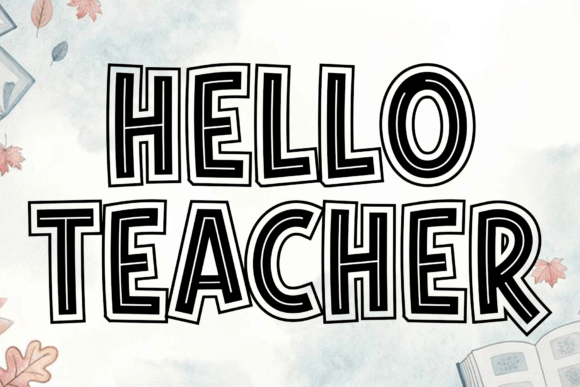
In the contemporary landscape of graphic design, typography serves as the voice of a brand. While sans-serifs dominate the digital screen for their legibility, there remains a persistent and growing demand for typefaces that evoke human connection. Among the myriad of options available to designers, Hello Teacher stands out as a distinct choice. It is not merely a font; it is an elegant and fluid handwritten script that captures the essence of a modern, sophisticated typeface. By bridging the gap between casual handwriting and high-end calligraphy, this font offers a unique solution for projects that require a personal, yet polished, aesthetic.
Understanding the technical and aesthetic nuances of a script font like Hello Teacher is essential for professionals ranging from wedding planners to social media managers. Unlike static block letters, fluid scripts require a specific approach to spacing, sizing, and color contrast to function effectively. This article explores the characteristics, applications, and strategic considerations of using this typeface to elevate visual communication.
Anatomy of an Elegant Typeface
To appreciate why Hello Teacher is effective, one must look at its construction. The font is characterized by its smooth curves and natural flow, mimicking the pressure variations of a pointed pen or a high-quality brush marker. However, unlike purely organic handwriting, this typeface has been refined for consistency. The kerning—the spacing between individual letters—is carefully calibrated to ensure that the script remains legible even at smaller sizes, a common failing point for many decorative fonts.
The visual weight of Hello Teacher is generally light to medium, which contributes to its airy and delicate feel. It avoids the heavy, aggressive strokes often associated with bold display fonts, opting instead for a gentler presence on the page. This makes it particularly suitable for content where the tone is intimate or celebratory rather than urgent or commanding. The swashes and ligatures add a layer of complexity, allowing designers to customize the connection between letters to create a more authentic handwritten look.
Strategic Applications in Modern Design
The versatility of a script font is defined by where it can be applied without looking out of place. Hello Teacher excels in environments that prioritize elegance and emotional resonance. Its utility spans across both print and digital media, provided it is used as an accent rather than a workhorse.
Luxury Wedding Stationery
The wedding industry is arguably the primary beneficiary of elegant script fonts. Invitations, save-the-dates, and menu cards set the tone for the event. Using Hello Teacher for headers or names on stationery immediately communicates a sense of sophistication and romance. The font’s fluidity mimics the hand of a professional calligrapher, offering a cost-effective way to achieve a high-end look without hiring a specialist for every piece of paper. It pairs exceptionally well with clean serif fonts for the details, creating a hierarchy that guides the eye naturally.
Intimate Event Branding
Beyond weddings, any event aiming for an exclusive atmosphere can benefit from this typeface. Think of high-end baby showers, milestone anniversaries, or boutique corporate retreats. The branding materials—badges, signage, and digital invitations—can utilize Hello Teacher to foster a welcoming and personalized environment. It breaks down the barrier between the host and the guest, making the event feel curated specifically for the attendee.
Editorial and Lifestyle Photography
In the realm of editorial design and social media, text often overlaps with imagery. Hello Teacher works beautifully as an overlay on lifestyle photography. Because of its semi-transparent nature and thin strokes, it does not obscure the background image. Instead, it acts as a secondary layer of information, perfect for quoting a subject in a magazine spread or adding a poetic caption to an Instagram post. It is frequently used in "mood board" aesthetics or high-end lookbooks where the typography needs to feel like part of the art direction rather than a label slapped on top.
Technical Considerations for Implementation
While the aesthetic appeal of Hello Teacher is undeniable, successful implementation requires technical diligence. Designers must consider legibility, contrast, and the medium of delivery.
Legibility vs. Readability: It is vital to distinguish between these two concepts. Legibility refers to the ability to distinguish one letter from another. While Hello Teacher is legible for short bursts of text, it is not designed for long-form body copy. Attempting to write a paragraph in this script will result in reader fatigue. Readability refers to the flow of the text. To ensure readability, designers should reserve this font for display sizes—typically above 24 points—where the intricate details of the letters can be fully appreciated.
Color and Contrast: Handwritten scripts often have thinner strokes than standard fonts. Therefore, color contrast is critical. Using Hello Teacher in a light grey text on a white background may look subtle and chic, but it often fails accessibility standards and becomes invisible on mobile screens. For practical use, a high-contrast pairing, such as dark charcoal on cream paper, or white text on a dark, blurred background, is recommended.
Pairing Strategies: A script font should rarely stand alone. The most professional results come from pairing Hello Teacher with a complementary typeface. A geometric sans-serif (like Montserrat or Raleway) offers a modern contrast, highlighting the organic nature of the script. Alternatively, a classic serif (like Garamond) can enhance the vintage or traditional feel of the design. The key is to let the script do the talking for the headline, while the secondary font handles the informational heavy lifting.
The Psychology of Handwritten Typography
Why do consumers and audiences respond so positively to fonts like Hello Teacher? The answer lies in psychology. In a digital world dominated by standardized, vector-based text, a handwritten font signals "human effort." It suggests that a real person was involved in the creation of the message.
This perception of effort translates into value. When a customer receives a product with a handwritten-style "Thank You" tag, they perceive the brand as more caring and attentive to detail. Hello Teacher taps into this psychology by offering the warmth of a personal note with the scalability of a digital font. It is a tool for building trust and emotional connection, bridging the gap between the screen and the human touch.
Current Trends and Future Outlook
Typography trends are cyclical, but the move toward authenticity seems to be a lasting shift. We are currently seeing a resurgence of "imperfect" design—grainy textures, raw layouts, and organic typography. Hello Teacher fits perfectly into this trend. It offers a polished version of imperfection.
Looking forward, the use of such scripts is likely to expand into UI/UX design, specifically in micro-interactions and loading screens where brands try to add personality. As web font technology improves, the rendering of delicate scripts like Hello Teacher on screens will become even sharper, allowing for more creative applications in digital interfaces.
Conclusion: A Tool for Sophistication
In the toolkit of a modern designer, Hello Teacher represents more than just a file to be installed. It is a strategic asset for adding fluidity and sophistication to a project. Whether used for the masthead of a luxury lifestyle blog, the centerpiece of a wedding invitation, or a delicate overlay on a photograph, this font delivers a message of elegance.
By understanding its technical limitations—avoiding long paragraphs and low-contrast pairings—and leveraging its strengths in display and branding, creators can utilize Hello Teacher to craft visual experiences that are not only beautiful but deeply resonant. It reminds us that in an age of automation, the appearance of the human hand remains the most powerful design element of all.