Crusher: Integrating a High-Impact Condensed Sans Serif into Professional Design Workflows
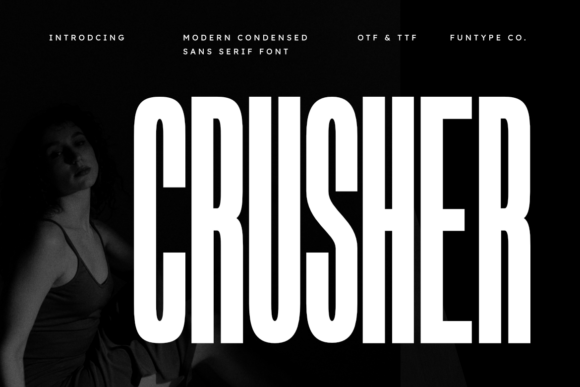
In the landscape of modern design, typography is not merely about legibility; it is a functional tool for hierarchy and brand voice. Among the various tools available to designers, Crusher stands out as a bold, modern condensed sans serif font engineered for precision and impact. Unlike standard typefaces that blend into the background, Crusher is designed to command attention. Its defining characteristics—refined vertical structure, clean solid lines, and a condensed footprint—make it a strategic asset for projects ranging from sports branding to high-impact digital marketing. Understanding how to implement this font effectively requires looking beyond its aesthetic appeal and examining how it fits into the broader planning and execution of a visual identity.
Understanding the Structural Integrity of Crusher
Before integrating a new asset into a project, it is essential to understand its technical and visual properties. Crusher features a confident and balanced design that prioritizes verticality. This condensed nature allows for more characters per line without sacrificing visual weight, a critical factor in responsive web design and mobile-first layouts. The font is characterized by its clean, solid lines, which provide a "striking, professional, and advanced look."
For the designer or business owner, this structural integrity means Crusher is not a "soft" font. It is an industrial-strength typeface. When planning a visual hierarchy, Crusher naturally gravitates toward the top of the pyramid. It is the voice of the headline, the logo, and the call to action. Recognizing this inherent boldness is the first step in the planning process; attempting to use Crusher for long-form body copy would be counterproductive to readability, whereas using it for high-level headers ensures the message is delivered with authority.
Strategic Placement in the Creative Process
Effective typography implementation happens in phases. Crusher is versatile enough to be introduced at different stages of a workflow, though its utility is most potent during the initial concepting and layout structuring phases.
Early Stage: Brand Identity and Logo Design
When developing a new brand identity, particularly for sectors like professional sports, fitness, or technology, the font choice sets the tone for the entire system. Using Crusher during the logo design phase allows creators to test how the brand name holds up against complex backgrounds. Because Crusher is provided in OTF and TTF formats, it offers maximum compatibility during the brainstorming stage, whether you are sketching in vector software or mocking up presentations in slide decks.
Mid-Stage: Digital Posters and Marketing Collateral
As a project moves from concept to execution, the focus shifts to application. Crusher excels in the creation of digital posters and social media assets. In a fast-paced marketing workflow, where assets need to be produced quickly and scaled across different platforms, the font’s consistent weight and spacing reduce the time spent on manual kerning adjustments. The "precise typography" ensures that whether the asset is viewed on a desktop monitor or a smartphone screen, the message remains uncompromised.
Workflow Integration and Technical Compatibility
A common friction point in design workflows is asset compatibility. A font that looks great in a preview but fails to render correctly in the production environment creates bottlenecks. Crusher addresses this by being supplied in both OTF (OpenType) and TTF (TrueType) formats. This dual-format availability is a practical necessity for modern teams.
- OTF Usage: Ideal for advanced typographic features in Adobe Creative Cloud applications (Photoshop, Illustrator, InDesign). Designers utilizing these platforms can leverage the font's full capabilities for complex layouts.
- TTF Usage: Essential for compatibility with older systems, certain web applications, and environments where OTF support is limited. This ensures that the "industrial branding" aesthetic remains consistent across all team members' machines, regardless of their operating system.
When integrating Crusher into a project repository, it is advisable to organize the font files within a centralized "Assets" folder. This ensures that when a project file is handed off to a collaborator or a client, the specific typeface required for the "high-impact" visual identity is readily available, preventing the default substitution of generic system fonts.
Practical Use Cases: From Sports to Industry
The utility of a condensed sans serif is best observed through specific application scenarios. Crusher is designed to handle the rigors of specific visual environments where clarity and dominance are required.
Sports Branding and Team Merchandise
In the realm of sports, the font must convey energy and strength. Crusher’s "refined vertical structure" mimics the posture of an athlete—upright, powerful, and ready. When designing jerseys, banners, or stadium graphics, the condensed width of Crusher allows for large, impactful lettering that fits within the physical constraints of the garment or signage without looking cramped. The "clean, solid lines" ensure that the numbers and player names remain legible from a distance, a critical requirement for sports graphics.
Industrial and Corporate Identity
For corporate clients in construction, engineering, or logistics, typography needs to reflect stability. Crusher provides a "professional and advanced look" that avoids the playfulness of rounded fonts. In a corporate workflow, this font can be used for annual report covers, presentation title slides, and website hero sections. It signals to stakeholders that the brand is serious, grounded, and forward-moving.
Optimizing for Digital Environments
While print remains relevant, the majority of modern assets are viewed digitally. Crusher is explicitly designed for high-impact digital posters. This requires an understanding of how condensed fonts interact with screen pixels and color contrast.
When implementing Crusher in web design or digital advertising, consider the surrounding negative space. Because the font is bold, it creates a strong visual anchor. To maintain the "striking" look described in its design philosophy, it should be paired with lighter, more open sans serifs or serif fonts for body text. This contrast creates a visual hierarchy that guides the user’s eye from the headline (Crusher) to the supporting information.
Furthermore, in digital environments, file size and load times matter. Using the TTF or OTF files efficiently—converting them to web-safe formats like WOFF2 where necessary—ensures that the aesthetic benefits of the font do not come at the cost of site performance. This is a crucial step in the technical implementation phase for web developers and digital marketers.
Long-Term Usability and Consistency
One of the often-overlooked aspects of font selection is longevity. Trends in typography shift, but a well-designed condensed sans serif tends to remain relevant. Crusher’s "balanced design" suggests a timelessness that protects a brand from looking dated after a single season. For business owners and freelancers, investing time in mastering a font like Crusher pays dividends in the long run, as it can be adapted to various campaigns and seasonal changes without losing its core identity.
Consistency is the hallmark of professional branding. By establishing a style guide that specifies the use of Crusher for specific weight classes and sizes, teams can ensure that every piece of communication—from an email header to a large-format trade show booth—feels cohesive. This level of organization streamlines the creative process, reducing the cognitive load of making design decisions from scratch for every new task.
Conclusion on Execution
Integrating Crusher into a design workflow is about more than just installing a file; it is about aligning the tool with the project's goals. Whether the objective is to create "professional sports logos" or "industrial branding," the font provides a robust foundation. By understanding its technical specifications (OTF/TTF), respecting its structural boldness, and applying it within a logical workflow, creators and professionals can leverage Crusher to produce visuals that are not only aesthetically pleasing but also strategically effective. It is a tool designed for those who value precision, impact, and professional execution in their visual communications.